Exhibit MET003: The Lake St. Martin's
Before we examine our last meteorite, let's note that Tentaclii has put together several scientific articles and news items from the time period Lovecraft wrote "The Colour Out of Space," as examples of the intellectual context for the tale. Go check it out.
Previously, we have examined two recent claims of meteorite strikes, and their unusual properties. The Red Rain of Kerala of 2001 may derive from an airburst meteor (though other research suggests it is just algae), with a handful of scientists suggesting it seeded the earth with extraterrestrial life forms. Three years ago, a meteor struck southern Peru, damaging nearby buildings and livestock, and resulting in villagers claiming illness after exposure to the fallen rock.
Our third case is of a much older meteorite, far older than humanity. And like the Colour that fell under what would become the Quabbin Reservoir outside of Arkham, Massachusetts, the Lake St. Martin Bolide has actually poisoned the groundwater of the rural residents of the small Canadian town of Gypsumville.
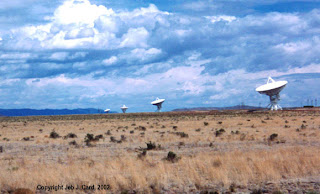
Roughly 230 million years ago, a large meteorite struck the earth, leaving a 24 km wide crater. This land is now in Manitoba, Canada, And that land is befouled. The place looks pretty blasted, though not exactly a heath (check out a visit by a geologist studying landing sites for Martian probes). Water there has unusually high concentrations of fluoride. The substance conjures up either visions of healthy teeth, or paranoid ravings of conspiracy theorists worried about the essence of their bodily fluids. But high intake of fluoride can actually cause "damage to teeth, softening of bones, calcified tendons and ligaments and neurological damage." It's not exactly the horror that befell the Gardner farm in "The Colour Out of Space," but there are some points of comparison.
The area is not heavily populated (check out impact and geological maps here)(and here). One resident of the region describes it as "barren stretches of boreal forest, inhabited only for resource exploitation or sheer force of habit." The people of two First Nations towns and the town of Gypsumville, would be ill-advised to drink the local groundwater, as it contains levels of fluoride above safety limits. A 2008 paper in the journal Geology demonstrates that the meteor strike broke up the local sediments through melting and shock, making them more susceptible to leaching, producing the toxic levels of fluoride. Simply put, a hidden deadly horror from outer space is reaching out from the vast depths of time to poison these backwoods communities.
In conclusion, visitors from outer space can (in addition to falling on your or exploding) poison you, possibly make you sick, and maybe propagate alien life on your planet.
Showing posts with label canada. Show all posts
Showing posts with label canada. Show all posts
Tuesday, September 14, 2010

Sunday, November 29, 2009
The Earthquake that Uplifted R'lyeh

Exhibit RLY002 - The Charlevoix-Kamouraska earthquake
February 28, 1925 saw one of the strongest earthquakes in Canadian history. Dubbed the Charlevoix-Kamouraska earthquake (nice overview from Natural Resources Canada, source of the Le Soleil image above), it was centered in the St. Lawrence River Valley.

Damage was not severe, but was nonetheless notable, and the event caused considerable unease in a region not accustomed to earthquakes. Images and description of some of the damage.

It caused minimal damage in Providence, less so in New York where Lovecraft was living at the time. This event was the inspiration for the South Pacific earthquake of the same date in "The Call of Cthulhu," which pushes the peaks of R'lyeh above the waters of the Pacific, allowing Cthulhu's dreams to menace sensitive human minds across the globe. Aftershocks of the Canadian quake in fact continued frequently throughout this period, largely ceasing on the day the crew of the Emma do battle with the cultists of the Alert, and one day before they land upon R'lyeh itself, and in turn the continent sinks back under the waves.
We can imagine Lovecraft, the amateur astronomer, reading about the quake later that year in the Journal of the Royal Astronomical Society of Canada. Now, this doesn't add up to having any effect on the other side of the planet, but it is the thought that counts.
Subscribe to:
Posts (Atom)